

# Eco-Friendly Wood Fiber ID Cards – A PVC Alternative
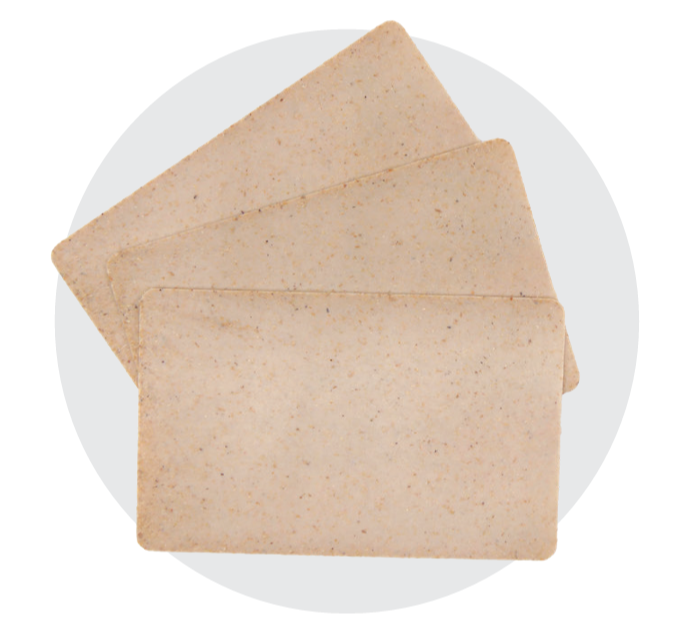
Organizations looking to reduce their reliance on traditional PVC plastic cards have historically had limited alternatives that work with standard ID card printing processes. These natural wood fiber cards offer an interesting option: a distinctive, wood-like appearance combined with a material composition designed to reduce environmental impact compared with conventional PVC cards.
Made primarily from plant-based PLA and natural wood fibers, these cards provide an alternative for organizations, businesses, and venues interested in more sustainable identification, labeling, and credentialing materials. Their natural appearance also creates a distinctive presentation that stands apart from conventional white plastic cards.
## Designed with More Sustainable Materials
These cards combine renewable, bio-based materials with recycled and recovered industrial byproducts:
– **Plant-based PLA:** Polylactic acid (PLA) is a bio-based plastic produced from renewable resources such as corn and other plant starches, rather than petroleum.
– **Partially recycled material:** 50% of the PLA used in the cards comes from post-industrial recycled material.
– **Recovered wood fibers:** The wood fibers are byproducts of industrial processing, including construction and furnishings, and originate from PEFC-certified wood resources.
– **Reduced environmental impact:** A life-cycle assessment conducted according to ISO 14040 and ISO 14044 standards found a lower environmental impact than PVC cards across all indicators studied.
For organizations evaluating alternatives to PVC, these material characteristics provide a meaningful starting point for reducing the use of conventional petroleum-based plastic in selected card applications.
## Natural Wood Appearance
Each card has a natural wood-like finish, making it especially useful when the appearance of the credential or label is part of the presentation. Because natural wood fibers are used, individual cards may vary slightly in overall color and in the distribution of visible fibers. This is a characteristic of the material, not a printing defect.
Potential applications include:
– Eco-conscious employee and staff identification
– Visitor credentials and special-purpose badges
– Hospitality, resort, and food-service applications
– Retail product tags and specialty labeling
– Membership and guest credentials
– Events, conferences, and environmentally focused organizations
– Organizations incorporating sustainability initiatives into their identification programs
## Card Specifications
– **Material:** PLA and natural wood fibers
– **Material composition:** 89% PLA, 10% wood fibers, and 1% colorant
– **Recycled content:** 50% of the PLA component is post-industrial recycled material
– **Color:** Natural wood appearance
– **Dimensions:** 85.6 mm x 54 mm (3.375″ x 2.125″) – CR80 format
– **Thickness:** 0.76 mm (30 mil)
– **Packaging:** 500 cards per package, supplied in five boxes of 100
## Important Printing Compatibility Information
Wood fiber cards require careful consideration when selecting an ID card printer and ribbon. Unlike conventional white PVC cards, the natural wood-colored surface affects how printed images and colors appear.
**Current testing has been limited to black resin and black wax ribbon applications.** These monochrome printing methods are the recommended starting point for organizations evaluating the cards with compatible printers. Printer, ribbon, and card combinations should be tested before committing to a production run.
**Color printing has not yet been validated.** Standard dye-sublimation color ribbons typically rely on a white card background to produce accurate and consistent colors. Since these cards have a natural wood appearance rather than a white surface, color output may look different from what customers expect on conventional PVC cards. Additional color testing is planned, but we do not currently recommend assuming standard full-color printing will produce predictable results.
Compatibility should be confirmed for the specific printer model and ribbon being used. These cards are not represented as universally compatible with all ID card printers. If you are considering them for an existing printer, contact IDSuperShop before ordering so we can discuss the application and help determine an appropriate testing approach.
## Handling and Storage Recommendations
To help maintain card quality and printing consistency:
– Store cards in a dry, controlled environment, ideally between 68°F and 77°F and 40%–60% relative humidity.
– Keep unused cards protected from dust, direct sunlight, high humidity, and elevated temperatures.
– Avoid touching the printable surface whenever possible.
– Do not use cards that are damaged, folded, dirty, or deformed.
– Avoid exposing cards to temperatures above 122°F, thermal shock, or excessive moisture.
– For cleaning, use warm water below 122°F or a neutral detergent diluted with water and a microfiber cloth. Dry thoroughly before use.
For best printing results, leave approximately a 5 mm margin around the card edges and avoid very fine text or intricate graphics.
## Find the Right Eco-Friendly Card for Your Application
Moving away from PVC does not have to mean compromising on the appearance or usefulness of your identification program. These wood fiber cards offer a distinctive alternative for applications where a natural finish and reduced reliance on conventional PVC are priorities.
Because printer compatibility and ribbon selection are important considerations, IDSuperShop can help evaluate the intended application before you make a purchase. Contact us with your printer model, ribbon type, and intended use so we can help determine whether these cards are a suitable fit.
Reviews
There are no reviews yet.